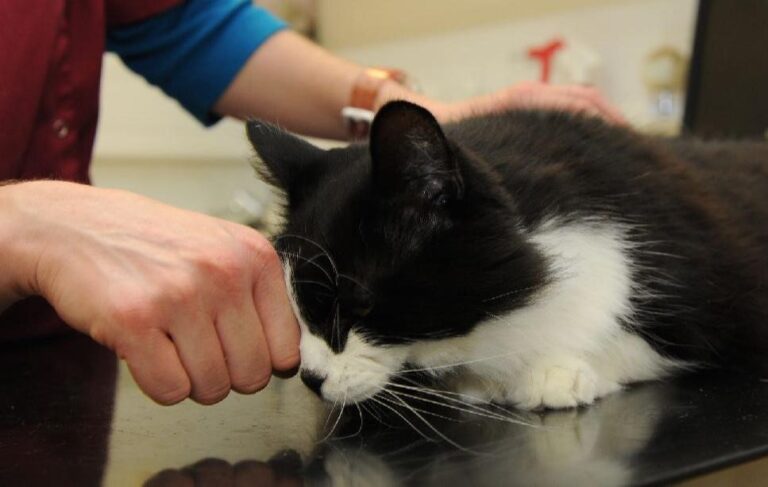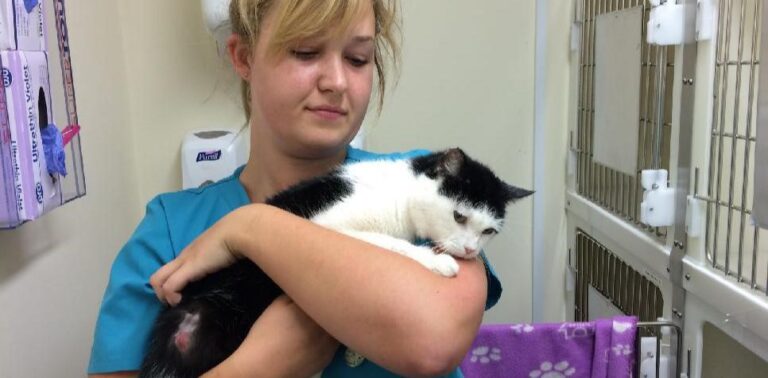
What is a cat? Why does it behave as it does, why does it sometimes seem more difficult to deal with than a dog, and how does this affect those working with cats?
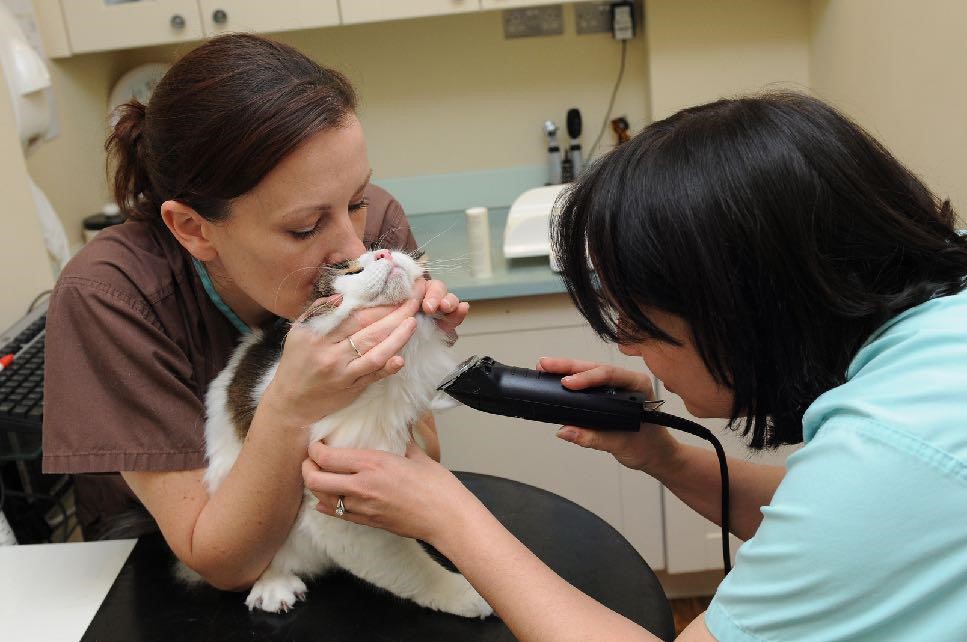
In this section we will explore how cats behave in a veterinary clinic, how vets and nurses can predict this, as well as looking at what owners often misunderstand about cats. For cats, stress not only affects the reliability and interpretation of many clinical tests, it is also strongly linked to manifestations of disease and response to treatment. Their home environment can also affect the care the clinic is trying to give.
A cat can be summarised as:

What does this mean for veterinary clinics?
Clients may misunderstand that:

What does this mean for veterinary clinics?
Clients may misunderstand that:
What does this mean for veterinary clinics?
Clients may misunderstand that:
Cats use scent as a means of social communication – usually to keep other cats at a distance (except when looking for mates or scent marking their core territory, or perhaps members of their feline group). Cats use pheromones and scent derived from glands over the face and body as well as urine and even faeces in different circumstances.
Cats have scent glands around their lips and chin, the top of the head, at the base of the tail, in between the digits of their paws and around their anal region. When a cat rubs around its owner it is these areas that leave its unique scent.
Similarly cats mark in the same way on twigs, branches and other objects in their territory. Cats will also claw on trees and fences leaving both a visual and scent mark from glands between their paw pads. The urine of an entire tom cat leaves a pungent smell.
All cats irrespective of gender and neutering status perform scent marking, including spraying. The frequency and pattern of urine spraying can be complex. Cats may also leave faeces uncovered and prominently sited (middening) rather than bury them as another form of scent marking.
‘Natural’ groups of cats, as found in feral or farm colonies where abundant food resources exist, are generally friendly societies where bonds between individuals are demonstrated by mutual rubbing and grooming within the group (and the females may cooperate in terms of pooling kittens). By rubbing against each other the cats exchange their scents to produce a group scent profile; therefore, cats can recognise each member of their social group by how they smell. There is very little aggression within a naturally formed group; however, if cats from outside the social group trespass or try to hunt on their territory, colony members (usually all related females) may show extreme aggression to get rid of these cats as they represent a threat to food and other resources.

What does this mean for veterinary clinics?
What can this mean in terms of client misunderstanding?
Cats spend around 4 per cent of their life (or 8 per cent of their non-sleeping time), grooming. The drive to groom is very strong. Cats are predators – they need to remain in top condition to hunt and to stalk prey, so maintenance is important. Grooming helps to remove parasites and anything that may degrade and smell on the coat. The hairs in the coat are also highly sensitive to movement and so help to give the cat information about its surroundings, wind direction, etc. Grooming is also involved in maintaining social relationships and is likely to serve as a comfort behaviour. Because of their fastidious nature, cats may groom poisonous substances from their coat that they have been exposed to, and which they would never otherwise directly eat or drink. While urine and faeces can be used for scent marking, cats may also wish to conceal their whereabouts by burying them. For humans the cat is usually an exceptionally pleasant animal to have around in that it does not smell to us and will usually use a litter tray very successfully if required (it is up to owners to prevent smell by frequent cleaning).
Cats will often naturally bury their urine and faeces, and as a general rule, deeper litter (within limits) is better – that might make a large plant pot a better litter tray than anything else in the house! Research has shown that cats prefer 1-3cm deep litter for defecation. Similarly outside, a newly dug area of the garden or an expensive piece of fine gravel work might be the most attractive latrine site to a cat if the alternative is a garden with solidly packed earth or no earth available to dig. Cats prefer soft, easy to rake substrates; clay-based litter seems to be preferred.
A cat’s natural latrine is away from its hunting, feeding and main activity areas and it tends to use different areas for urinating and defecating. Owners should try to accommodate this, not only by following the ‘number of cats plus one’ rule regarding the number of litter trays, but also by making sure that trays are not placed next to food bowls or close to a busy thoroughfare. Somewhere secluded and quiet is ideal.
Reasons why cats may start to use alternative sites to the litter tray include:

What does this mean for veterinary clinics?
Clients may misunderstand that:
What does this mean for veterinary clinics?

Clients may misunderstand that:
Although some cats will never accept living with another cat in the same household, most cats will enjoy human company if socialised to humans in early life. However, cats have to learn to enjoy interacting with people at a very young age if they are to accept people. Experiences that kittens have within their first two months of life are very important in influencing their behaviour and reactions as adults. The cat sleeping peacefully in the living room is no different, in many respects, from others which live completely independently outside, except in their exposure to man.
During the first few weeks of life the kitten learns its social identity and how to feed itself. Its mother will wean it from sucking milk onto eating dead and, later, live prey. This process gradually introduces the kitten to learn how to kill and hunt the prey it needs to survive. In a domestic setting the kitten also practises hunting behaviour. This is the origin of the batting, chasing and pouncing behaviour that all kittens spend a great deal of their time rehearsing. By participating in the play activities of kittens, using toys and games, we are taking part in their development in a very similar way to a mother and littermates.
Up to the age of about two months, the kitten is particularly sensitive to learning about its environment and establishing social bonds. Research conducted into the quality and quantity of handling during this ‘sensitive period’ shows there are distinct benefits to providing the necessary socialisation in the right way – kittens that are handled by at least four different people between the ages of two and seven weeks tend to be more sociable towards humans than those that didn’t benefit from such handling. The mix of humans should include male and female, young and old and handling should be for short frequent periods.
It’s not just about people; kittens also need to understand what it is like to live in a domestic home. Experiencing noise, children, dogs, vacuum cleaners, different locations and even car journeys enables the kitten to learn that not everything is to be feared.
As kittens approach adulthood they develop an adult set of personality characteristics that are partly determined by their genes, partly by their early experience and partly by environment and how they are treated. On average, sexual maturity occurs at around six to nine months of age, but can be earlier or
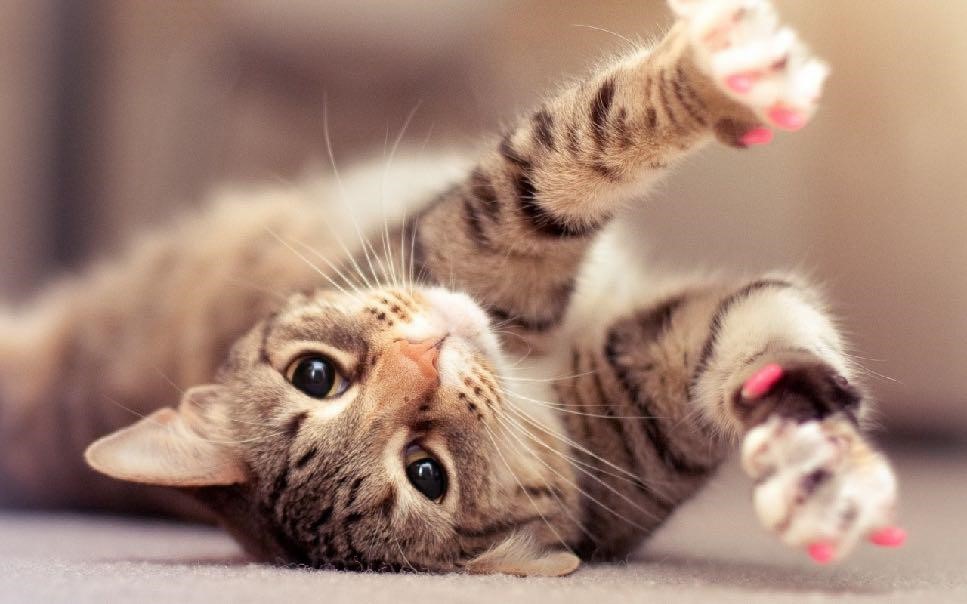
later depending on what time of year the kitten is born. From this time until full social maturity, anything from 18 months to 4 years of age with an average of about 2 years, gradual changes take place in a cat’s personality and it starts to become territorial. In some cases kittens change from being sociable and bold, to become more solitary, self-reliant and cautious.
This period in the cat’s life represents the time when it truly discovers the value of its territory and its capacity to live as an individual. In male wild or feral cats this would also be when they gradually move away from the extended family group in which they were reared. This can be a worrying and upsetting time for cat owners because the young cat is straying further from home and entering into conflict with other cats — the value of neutering in reducing roaming can be seen at this time.
What does this mean for veterinary clinics?
Cats owners may misunderstand that:
There may be a limit to what can be done for nervous kittens or cats which have not had the right early exposure and feral kittens are unlikely to ever make good pets.

Национальными партнерами ( national partners) ISFM являются организации, представляющие ветеринарных врачей разных стран мира, специализирующихся по болезням кошек.
Эстонию представляет ESFP. ESFP – Это некоммерческая организация, целями и задачей которой являются пропаганда дружественного отношения к кошкам и создание cat friendly clinic(s) в Эстонии, обучение врачей, интересующихся болезнями кошек и желающих быть cat friendly, а так же информирование ветеринарных врачей Эстонии о новостях в кошачьей медицине и датах ветеринарных мероприятий, конференций и онлайн вебинаров в Европе и Америке.
ESFP является дружественной организацией EVS ( Eesti Väikeloomaarstide Selts) и ELÜ ( Eesti Loomaarstide Ühing) и работа организации направлена на улучшение качества ветеринарной помощи кошачьим пациентам и создания более комфортной среды для кошек в ветеринарных клиниках Эстонии.
На сайте организации можно получить информацию для ветеринарных врачей и владельцев кошек, обучающие материалы и много другого интересного о кошках, их физиологии, поведении, проблем в поведении и методов их решения, научные новости и достижения в медицине кошек.


ISFM-i riiklikud partnerid on kassidele spetsialiseerunud loomaarste esindavad organisatsioonid üle kogu maailma.
Eestit esindab ESFP. ESFP on mittetulundusühing, mille eesmärk ja ülesanne on edendada kassisõbralikku suhtumist ja luua Eestisse kassisõbralikke kliinikuid, koolitada arste, kes on huvitatud kasside haigustest ja soovivad olla kassisõbralikud. Samuti kuulub ESFP valdkonda Eesti veterinaararstide teavitamine kasside meditsiini uudistest ning Euroopas ja Ameerikas toimuvate veterinaarsündmuste, konverentside ja veebinaride toimumisaegadest teavitamine.
ESFP teeb tihedat koostööd EVS-i (Eesti Väikeloomaarstide Selts) ja ELÜ-ga (Eesti Loomaarstide Ühing) ning organisatsiooni töö on suunatud kassidest patsientide veterinaarabi kvaliteedi parandamisele ja kassidele mugavama keskkonna loomisele Eesti veterinaarkliinikutes.
Organisatsiooni veebilehel on teavet veterinaararstidele ja kassiomanikele, õppematerjale ja palju muud huvitavat kasside, nende füsioloogia, käitumise, käitumisprobleemide ja nende lahendamise meetodite, teadusuudiste ja kassimeditsiini edusammude kohta.
ISFM’s national partners are organizations that represent veterinarians from all over the world who specialize in cat diseases.
Estonia is represented by the ESFP. ESFP is a non-profit organization, which goals and objectives are to promote cat friendly attitude and establish a cat friendly clinic(s) in Estonia, to train interested in cat diseases and want to be cat friendly doctors as well as to inform Estonian veterinarians about the news in cat medicine and the dates of veterinary events, conferences and online webinars in Europe and America.
ESFP is a friendly organization of EVS (Eesti Väikeloomaarstide Selts) and ELÜ (Eesti Loomaarstide Ühing) and work of the institution is aimed to improve the quality of veterinary care for feline patients and create a more comfortable environment for cats in veterinary clinics in Estonia.
On the website of non-profit organization, you can get information for veterinarians and cat owners, training materials and many other interesting things about cats, their physiology, attitude, problems in behaviour and methods of solving them, scientific news and achievements in cat medicine.
Eesti kasside praktiseerivate loomaarstide selts (Estonian Society of Feline Practitioners) asutaja ja president on dr. Olga Sjatkovskaja Haabersti Loomakliinik
Olga Sjatkovskaja kuulub erinevatesse rahvusvahelistesse organisatsioonidesse, mis ühendavad veterinaararste, kes on sügavuti seotud ning huvitatud kassihaigustest ( ISFM, ICatCare, AAFP, ABCD, ISCAID).
Alates 2000. aastast on dr. Sjatkovskaja osalenud aktiivselt rahvusvahelistel veterinaarkonverentsidel Euroopas ja Ameerikas, omandades uusi teadmisi ja jagades neid aktiivselt kolleegidega. Samuti on ta kassihaiguste lektor veterinaaride konverentsidel Eestis, Lätis, Venemaal, Ukrainas. Samuti annab ta loenguid kassihaiguste teemadel omanikele, kasvatajatele ja vabatahtlikele.
2019. aastal läbis dr Sjatkovskaja koolituse ning sai “kassiadvokaadi” diplomi – Cat Advocate ( Cat Friendly Vet Professional). 2020. aastal sai kliinik, kus Olga töötab, kassisõbraliku kliiniku staatuse (hõbe) (Cat Friendly Clinic). Sellega on kliinik esimene CFC mitte ainult Eestis, vaid kogu Baltikumis!
Kassiarmastus on nakkav! Kassisõbraliku kliiniku (Cat Friendly Clinic) edendamise ja ESFP arendamise korraldaja ning assistent on ka Haabersti Loomakliiniku loomaarst ning Olga kolleeg dr. Anna Simhes.
The founder and president of the Estonian Society of Feline Practitioners (Eesti Kassiaarstide Ühing) is Dr. Olga Sjatkovskaja Haabersti Loomakliinik
Olga Sjatkovskaja is a member of various international organizations, that unite veterinarians who are deeply engaged in cat diseases and interested in this issue ( ISFM, ICatCare, AAFP, ABCD, ISCAID).
Since 2000, Dr. Sjatkovskaja taking part in international European and American veterinary conferences receives new knowledge and actively shares it with colleagues. Lecturer on cat diseases at conferences for veterinarians in Estonia, Latvia, Russia, Ukraine. She is also a lecturer on cat diseases for owners, breeders and volnteers.
In 2019 Dr. Sjatkovskaja was trained and received a diploma of “Cat Advocate” (Cat Friendly Vet Professional) and in 2020, the clinic where Olga works gained the status of Cat Friendly Vet Professional (silver) and is the first CFC not only in Estonia, but also in the Baltic region!
Love for cats is contagious! The organizer , promotion assistant of the Cat Friendly Clinic in Estonia and the ESFP development is Dr. Anna Simches, a veterinarian at Haabersti Loomakliinik and Olga’s colleague.
Основателем и президентом Эстонского Общества врачей фелинологов ( Eesti Kassiaarstide Ühing, Estonian Society of Feline Practitioners) является др. Ольга Сятковская Haabersti Loomakliinik
Ольга Сятковская является членом различных международных организаций, объединяющих ветеринарных врачей, углубленно занимающихся и интересующихся болезнями кошек ( ISFM, ICatCare, AAFP, ABCD, ISCAID).
С 2000 года др. Сятковская активно участвует в международных ветеринарных конференциях Европы и Америки, получает новые знания и активно делится ими с коллегами. Лектор по болезням кошек на конференциях для ветеринарных врачей Эстонии, Латвии, России, Украины. Так же является лектором по болезням кошек для владельцев, заводчиков и волонтеров приютов.
В 2019 году др.Сятковская прошла обучение и получила диплом « кошачьего адвоката» – Cat Advocate ( Cat Friendly Vet Professional) и в 2020 году клиника, где работает Ольга , получила статус Cat Friendly Clinic ( silver) – и является первой CFC не только в Эстонии, но и в Прибалтике!
Любовь к кошкам заразна! Организатором и помощником в продвижении Cat Friendly Clinic в Эстонии и развитии ESFP является также др. Анна Симхес, ветеринарный врач Haabersti Loomakliinik и коллега Ольги.