Recent articles
An ISFM Cat Friendly Clinic
Having a clinic that is genuinely ‘cat friendly’ involves at least three distinct aspects:
- First, and of vital importance, is the attitude and approach that the whole healthcare team take towards feline patients and their owners – what has been termed ‘cattitude’! Along with this, it is important that the clinic has a proactive approach to client communication;
- Second, it is important that clinical staff undergo continuing professional development to keep up to date with new knowledge in feline medicine and surgery, and in all aspects of cat Along with this, measures should be in place to ensure clinical outcomes are being monitored and that improvements are being made where necessary;
- Third, it is important that the clinic has an appropriate design and layout, and has appropriate equipment, facilities, and instruments to ensure feline patients can be cared for in the best possible
These three aspects are all important and combine together to form a clinic that is both ‘cat friendly’ and ‘cat caring’.
Your clinic may already be working in many cat friendly ways. However, there may be additional, often small, things that can make a big difference. This section allows you to look at all the different aspects in your own clinic to achieve a higher standard of cat friendliness.

Don’t be put off – rather, be creative! Some of the cat friendly criteria may initially seem daunting, particularly for small clinics. Don’t let this distract you – with some creative thinking about the use of your space and facilities, most things are possible.
Developing ‘cattitude’ – the right attitude and approach to feline patients
Developing the right attitude to cats has a number of elements. Some people are more empathetic towards cats than others and are able to handle them in a calm and relaxed manner. For others, this does not come easily or naturally, but that does not mean it cannot be learned. The starting point is a proper understanding of cats (see section 2 – What is a cat?). Having a genuine understanding of cats will help enormously, along with developing a calm approach, realising that ‘less is more’ when handling and restraining cats, and having consideration too for the cat owner and the challenges and difficulties they face in even getting the cat to the veterinary clinic in the first place!
A clinic with a good attitude to cats and cat owners will have staff who:
- Are overtly welcoming to cats
- Have a positive attitude to cats and are knowledgeable about their needs both in and outside the veterinary clinical setting
- Understand cat owners and understand the challenges in getting a cat to the clinic
- Know how to behave towards and around cats
- Understand and take note of the behaviour of cats in the clinic, and can modify their approach appropriately in response
- Know how to handle cats. Crucially, this must be done in a way that reduces rather than increases stress, which means that heavy restraint is avoided unless absolutely necessary
- Apply ‘cat friendly’ principles in all aspects of the care they provide for cats and cat owners
- Encourage the best possible preventive healthcare care for cats
For the cat and owner, nothing is worse than members of the healthcare team who give the impression (intended or not) that they are disinterested in cats or do not understand them. Conversely, if a cat friendly attitude pervades the clinic, this will create an extremely strong positive impression on clients.
An understanding approach, and a desire to ‘do the best possible’ for the cats coming in to the clinic will set the background against which many (often small) changes to structure, handling and procedures will convey a strong cat friendly message.
This is vital for the whole healthcare team – the approach of the veterinarian in the consulting room is crucial, but the first contact the owner will have with the clinic will usually be via a nurse or receptionist, and the cat may have had to spend time in the waiting room before going in to the consult room. Ensuring that all staff have a good attitude and approach will help owners and cats feel comfortable and minimise stress. A cat friendly ethos is thus essential for all members of staff.
Having familiarity with, and being able to recognise, various cat breeds and personality types and to know some of their basic characteristics will help in being able to demonstrate understanding to clients. Also being aware that on occasions clients may have strongly bonded cats (eg, a pair of related individuals from a more social breed such as Oriental or Asian breeds), and being willing to consider having both cats at the clinic together so that both smell the same afterwards can help prevent relationship problems between such cats.
Have staff who understand cat owners
In addition to knowing and understanding cats and their unique needs as veterinary patients, understanding the cat owner too is vital. For many owners, the process of taking a cat to the clinic is highly traumatic. They will have had to

catch the cat, confine it in a carrier, take it away from its natural environment and territory, often travel in a car or on public transport, and then bring it into the clinic. For most cats this is a highly stressful event that inevitably causes distress (and often exhaustion!) to clients too. Understanding the implications of veterinary visits for cat owners, and what needs to be done to reduce the negative impact, will help enormously.
First impressions
The right attitude starts long before the cat enters the front door of the clinic. Often, the person to make the first impression on the client will be the one who answers the telephone and makes the initial appointment. Much can be done at this initial stage to make the client feel at ease and to also help facilitate a ‘low stress’ visit. Advising owners on the most appropriate ways to bring the cat to the clinic and helping them remain calm and relaxed has a very positive effect, both on the client and the cat. The cat will be exposed to many stressors such as:
- A strange cat carrier
- An unfamiliar car journey
- Strange smells, sights and noises on the journey and in the clinic
- Unfamiliar people and animals, both of which can be highly threatening
- Being handled and examined by unfamiliar people in an unfamiliar environment
- Potentially having investigative procedures done and being hospitalised at the clinic
These can be significant challenges for any cat, but staff can help at the outset by advising clients on the best way to bring their cats to the clinic, on the type of carrier to purchase and how to ensure the travel is safe.
- Carriers should be strong, escape proof, and allow easy access for both the cat and the owner/clinic staff:
- Top-opening plastic-coated wire baskets make no provision to allow the cat to hide, so placing a blanket over the carrier helpsPlastic carriers that can have the top half removed are useful for examining cats that do not want to leave the carrier
- If there is more than one cat, bring them in separate carriers to avoid defensive aggression under stress (the carriers can be kept together if the cats are friendly at home)
- Ideally the cat should regard the carrier as part of its home territory, so that it doesn’t
 become a signal for a stressful Using the carrier as one ofthe bedding/resting areas for the cat at home on a permanent basis is ideal. If this is not possible, it helps to get the cat used to it for a few days before the clinic. Feeding the cat in the carrier at home can help to create a positive association between the cat and the carrier.
- The carrier needs to smell familiar and reassuring to the Ask the owner to put in some clothing that smells of the cat’s favourite person, or some bedding that the cat has been using. In addition, if the synthetic feline facial pheromone preparation is available, spraying this onto the bedding that will be used in the basket, or just spraying it onto the basket itself about 30 minutes before putting the cat in, may help.
- Cats need to be able to hide – covering the cat carrier when travelling may help reduce stress. This will also be invaluable in the waiting room and when the cat is being transferred around the It is much preferable to use a cover like this with an easily opened carrier than to use a carrier with mostly solid sides that only has a small front opening.
- Secure the carrier in the footwell of the car behind the front seat, or strap it in using a seat belt to make sure it is secure and will not move. It is also important to ensure that the carrier is level and not secured at an
- Drive calmly and try to avoid loud noises and music! Talk quietly and reassuringly to the cat and stay
- Take spare bedding in case of accidents (urination or defecation in the carrier).
It is important that both the cat and the owner are welcomed and set at ease when they arrive at the clinic. A friendly greeting is essential with clear information about the waiting area and procedures. Some clients may prefer to sit in the car with their cat while they wait or check in without the cat to see if there are dogs in the waiting room. Adopting a flexible approach that fits in with the client and cat will be helpful.
Cat advocate
Having a ‘cat advocate’ in the clinic who can be the catalyst for educating the whole clinic and encouraging everyone is hugely beneficial both to the clinic and to the clients. It is all about understanding cats, developing the right techniques and having confidence. Clinics that have appointed a cat advocate find the person becomes a focal point for information, discussion and implementation of ‘thinking cat’. This person does not have to be a veterinary surgeon – often nurses or other ancillary staff are often excellent on this role.
Have staff who know how to behave towards and around cats
Whether directly involved with the handling and care of cats or not, it is important that the whole veterinary healthcare team understand how to behave around cats, such as:
- Being aware of cats’ sensitivity to smell – wearing strong perfumes or excessive use of air fresheners, along with the normal smells of the clinic, can be alarming to the cat. Ventilate rooms and rinse off disinfectants thoroughly as directed by the manufacturer. Wherever possible, use disinfectants that are not highly scented
- Being aware of the cats’ sensitivity to sound – cats have much more acute hearing than humans or dogs, and this needs to be taken into
- Being aware that cats are away from their normal territory – while a number of cats can cope remarkably well with being taken out of their normal environment, many more find this very challenging and Simply being aware that the cat is likely to be stressed, and responding
appropriately (gentle, empathetic approach, keeping cats separate from other pets and from each other, etc.) will be very helpful
- If available, a synthetic facial pheromone diffuser or spray can be used in the waiting room and consulting This may help reduce stress for the cat, but is no substitute for appropriate facilities and a good attitude
Have staff who know how to handle cats
Appropriate handling of cats is crucial. Cats are generally sensitive to unfamiliar people and situations and their ‘body language’ may be misunderstood. Often fear is overlooked as a cause of aggression, and subtle signs of stress or pain can easily be overlooked.
Handling cats well, even for simple techniques, is crucial but rarely given enough thought. This is a very important aspect of a cat friendly clinic. Develop good handling techniques with all of the clinic staff – you will quickly find that some people enjoy handling cats and are much better at it than others: try to use people’s natural abilities, but also ensure everyone is able to learn and develop their skills.
Adopting a ‘less is more’ approach is critical to cat handling – cats generally respond well to minimal restraint. Many cats are frightened, but if they can be gently reassured rather than heavily restrained, this will help prevent most cats becoming defensively aggressive. Scruffing (grabbing or holding it by the loose skin at the back of the neck) should only be used as a last resort for restraint, and cats should never be lifted and held up by the scruff. Grabbing and immediately scruffing or heavily restraining a cat can be highly intimidating and often provokes defensive aggression.
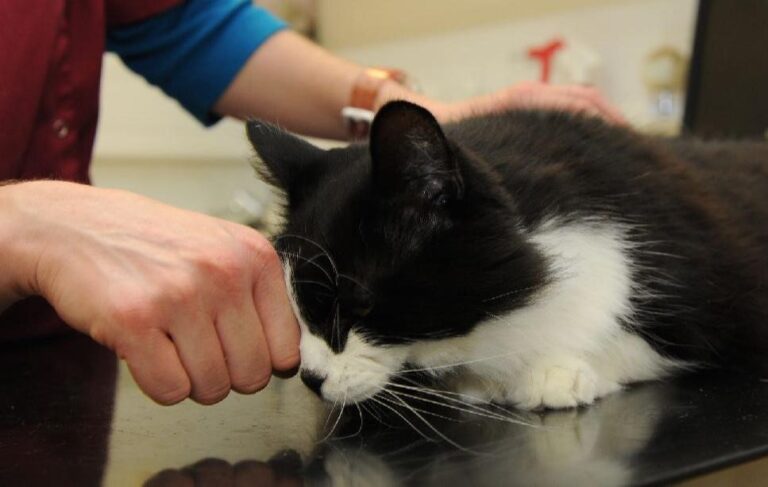
- Always approach a cat in a calm manner. Don’t look the cat in the eye on first contact (direct and especially prolonged eye contact is very threatening to cats) – look past it and blink slowly. Let the cat sniff your hand first to gauge responses before you attempt physical Stroking and talking to the cat before lifting it from a cage or carrier is ideal if the cat allows this. Rub your hands over the cat’s own pheromone centres (above the bridge of the nose and the preauricular area). The cat will often then put its head in your hands – very impressive for clients!
- Have items such as thick towels to hand for calm restraint if
- Being moved around on a slippery surface can be quite A towel or rubber mat that gives the cat something to grip can help. A comfortable bed on the table can also encourage cats to sit or lie down.
- Use cotton overalls – synthetic material can lead to electrostatic

Handling cats in the hospital environment
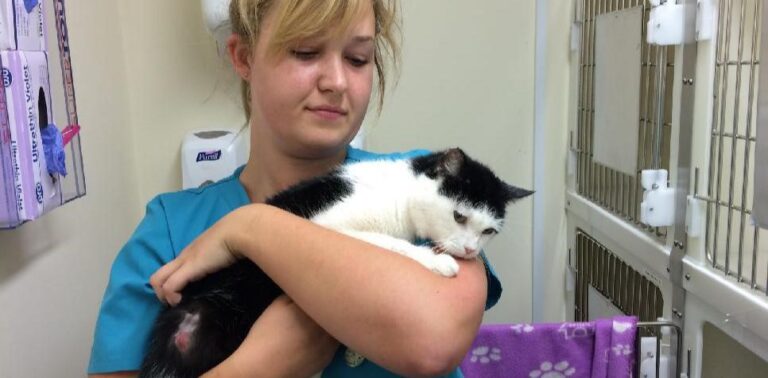
Many cats respond well to human interaction. Making time for staff to play, stroke (gently, especially with the head area) and groom the patient will significantly reduce stress in many hospitalised cats. However, different cats will enjoy different things; assess each individually – some cats prefer to be left alone, and these need to be recognised and left in peace.
- Handle cats quietly and gently, but recognise when they need or want to be left
Try to limit the number of personnel around hospitalised cats and view the environment from their perspective, particularly bearing in mind their sensitive senses of hearing and smell.
- Consistency, predictability and feeling in control are very important for cat
- Quiet music played in a hospitalisation ward may have a calming
- A quiet area for minor procedures such as collecting blood, performing blood pressure assessment and inducing anaesthesia is Let the cat get used to the room before starting any procedure. These procedures should not be done in front of other cats.
- Educate all staff that staring and intrusive or rough handling can be stressful for most cats and highly detrimental for
- If possible, provide a separate room for visiting owners to avoid disturbing the other cats and to give them time to settle and
- Carefully observe the behaviour of each cat, and be prepared to implement changes immediately if problems become
- If cats are simply being boarded at the clinic, for example while the owner is on holiday, this should only be done in a dedicated boarding cattery facility which is completely separate from hospitalised cats, with strict hygiene policies to prevent transfer of infectious
- If feeding treats causes no problems with treatment and the cat responds to them, use them to create a positive association with the
The AAFP/ISFM Feline Friendly Handling Guidelines provide an excellent resource for further information on handling and clinics should comply with these guidelines (also available on the JFMS website – https:// journals.sagepub.com/page/jfm/collections/guidelines/index).
Communication between the clinic and the client
Effective communication between the clinic and the client is vitally important in delivering comprehensive care to the feline patient. Again, it is important that communications are done in an empathetic and understanding way, and clients are given the opportunity to contribute to any discussions and voice any concerns. This not only applies to clinical investigations and treatments, but to all aspects of client communication. For example, clients should be reassured when booking an appointment; procedures should be explained to them and what to expect when they arrive at the clinic; and advice should be given, if necessary, on how best to transport the cat to the clinic. Giving owners time to ask questions is also important in gauging how well they have understood what you have explained. Important aspects of client communication, and some ways that this can be enhanced include:
- Being able to communicate directly with all or virtually all clients who attend the clinic – this may be by post, email, text message, social media or telephone, and the technique may differ between clinics and between However, some form of communication is essential for reminding clients when routine prophylactic therapy is due (eg, vaccine reminders, flea treatment reminders, etc.), and ideally the clinic should be taking the opportunity to undertake further proactive communications through things like a clinic newsletter or social media posts. Use appropriate language and explain terms to clients – they will vary greatly in their medical and veterinary knowledge.
- Clients should be aware of who is taking care of them and their cat. It is recommended that a fully up to date list of all members of staff is clearly displayed in the waiting room (or on the clinic website) along with the role of the staff member in the clinic (eg, nurse, ward assistant, receptionist, veterinarian, ) and their photograph, so clients can easily recognise staff. If you have a cat advocate then make this known to clients.
- Whenever investigations and treatments are being discussed with clients, it is important that the different options that are appropriate and available for the case are talked about openly with the client. The client should be provided with reasonable estimated costs, and where necessary (and where clients request it) these should be provided in writing. Whenever investigations and/or treatments go beyond initial estimates, clients should

- be informed at the earliest possible time and where necessary further discussions should take place over options that may be available. When charging for work that has been done, fully itemised invoices should be made available to clients on request.
- A very valuable principle to adopt in the clinic is to have one or more members of staff nominated as ‘cat advocates’. This person or these
- people do not necessarily have to be veterinarians, and indeed it can be more helpful if they are nurses, but they should be people who are naturally empathetic with cats and their owners and who have a good understanding of cat behaviour and how to handle and approach cats. The ‘cat advocate(s)’ should be clearly identified so that clients can see who they are, and cat clients can be encouraged to ask to speak to the advocate if they have any particular concerns about their cat in the clinic. The ‘cat advocate’ can also be asked to take responsibility for ensuring ‘cat friendly standards’ are being met within the clinic.
- Feedback (both positive and negative) should be proactively solicited from clients, but in addition, the clinic should have in place a written policy outlining how clients are able to make a formal complaint and how these are handled by the The complaints policy should be available for clients to see on request.
- Provision of relevant printed material to supplement verbal information conveyed during a consultation is strongly recommended, as a substantial proportion of any verbal communication is likely to be rapidly In addition, printed client information sheets should be made available in the waiting/reception area and proactively used to address common issues. The CFC client leaflets show how to medicate cats (eg, giving tablets, eye drops, ‘spot-on’ treatments, etc.), and advise on transporting cats to and from the veterinary clinic. Advice on appropriate, reliable and accurate websites may be appreciated – for example the International Cat Care website, www.icatcare.org
-
Provision of ‘out of hours’ care
While not all clinics will be able to provide continuous 24-hour care for hospitalised cats, or provide a 24-hour emergency service, it is important that clients understand the level of care provided and what to do in an emergency situation. Therefore:
- Clinics should have a policy on how to handle emergency treatment of cats outside of normal opening hours of the Clients should be given clear instructions on how to obtain emergency treatment for their cat. Such information may, for example, be relayed through a recorded message clients receive when they contact the clinic by telephone, or through an individual who may be responsible for answering telephone calls outside normal working hours. Clients should not be left in doubt as to how to obtain prompt emergency care for their cat when it is required.
- For cats that are hospitalised overnight or at weekends/public holidays when the clinic is not normally open, clients should be clearly informed of the level of staffing in these situations and how frequently the cats are examined. While continuous monitoring of hospitalised cats outside normal working hours may be unachievable in many situations, clients should always be informed about the level of care and monitoring that will be provided. Ideally this will be in the form of a written brochure that might also outline other services the clinic offers.
Find out how cat friendly you are
Implementing changes in your approach to cats can make a huge difference in the clinic, and you may well notice some obvious changes very quickly.
However, remember that it is vital to look at things from the owners’ perspective too, and ensure that any changes you make also address their concerns and perceptions. Soliciting feedback and information from owners is important and can be done in two main ways:
- Firstly, it is crucial that clients are given opportunities to feedback information to the clinic (both positive and negative) on all aspects of their experiences at the Clients should be encouraged to do this and given good options and opportunities to provide feedback (eg, filling out cards in the clinic, posting messages to a website, etc.). Clients should be allowed to provide either anonymous or named feedback as they choose.
- Secondly, feedback can be solicited through ‘mystery shoppers’. This can be done through an external company or getting contacts who have a cat to call and make an appointment ‘anonymously with the clinic (ie, nobody in the clinic should know who they are) and then subsequently provide feedback on the quality of service provided and aspects of how cat friendly and understanding the clinic This can give invaluable insights from the client perspective that can be difficult or impossible to get in other ways.
Clinical skills, training and development of staff
Continuing professional development
Good clinical practice should not only involve keeping up to date with knowledge, but this should be applied effectively in the clinic setting. Practice protocols and treatment regimes should be modified in the light of current ‘best practice’.
To ensure good and current clinical standards in the clinic, it is important for clinical staff (veterinarians and technicians/nurses) to undergo relevant continuing professional development (CPD). This can be provided in a number of different forms, for example:
- Attendance at conferences and seminars
- Webinars
- Distance education courses
- Private reading of journals/articles/papers, It is recommended that:
- Veterinarians undertake a minimum of 35 hours of CPD per year in Personal/private study (reading journals, books, etc.) can account for up to 10 hours of this
- Nurses/technicians undertake minimum of 15 hours per year, and again up to 5 hours of this can be personal/private study
- A significant proportion of the CPD undertaken by both veterinarians and nurses should be feline-related, but the exact proportion may need to be approximately in line with the proportion of their clinical time spent undertaking feline work. Written records of the CPD undertaken by all members of the clinic should be kept and
Clinic library and availability of reference materials
It is important that a range of current (up to date) relevant reference materials is available to support both veterinarians and nurses in the clinic.  These should include, but are not limited to:
- Current small animal and feline-specific textbooks
- Current small animal and feline-specific journals
The ISFM produces a range of materials that are designed and written to be relevant and helpful to veterinarians in clinical practice, including the JFMS. Practice membership of ISFM provides access to JFMS and monthly webinars for up to 5 vets at the clinic. Free nurse ISFM membership gives access to the nursing journal Feline Focus.
Good clinical practice
Good clinical practice should not only involve keeping up to date with knowledge, but this should be applied effectively in the clinic setting. Clinic protocols and treatment regimes should be modified in the light of current ‘best practice’.
Importantly, some form of on-going monitoring is encouraged to assess clinical outcomes and to help identify where improvements might be made – ie, a form of clinical audit should be regarded as a routine part of good clinical practice.
Regular opportunities should exist for veterinarians and nurses to review clinical practices and to discuss clinical outcomes to help identify areas that may require attention. This may be in the form of regular clinic meetings, incorporating ‘morbidity and mortality’ rounds, where cases that have developed unexpected complications or have died unexpectedly are reviewed in order to determine if any policy changes in the clinic are needed to avoid problems in the future.
Where only small numbers of staff are involved, opportunities to discuss clinical protocols, procedures and cases with peers outside of the clinic should be sought, and this is encouraged for all clinics to help learn from other people’s experiences – for example, on the ISFM Member Discussion Forum.
Making the clinic ‘cat friendly’
For any veterinary clinic, care needs to be taken over the location, accessibility and general standard of the clinic building. As a general principle, the clinic needs to be readily accessible to clients and, especially for cats, needs to be free from excessive noise. The clinic should be well maintained and:
- Be in good decorative order and have good levels of clinical cleanliness
- Have no offensive odours and have adequate ventilation
- Have good lighting throughout
- Have adequate safeguards to ensure that cats cannot escape
Waiting room – the gateway to the clinic
The waiting room and the staff in the waiting room are responsible for creating both the first and last impressions for the cat and the client during the visit to the clinic. A well-designed waiting room with cat-friendly staff can set the scene for a low stress visit to the clinic for the cat and a positive experience for the owner. Each clinic will need to work out what measures are practical and usable in their situation, but the key to creating a truly cat friendly waiting area is to consider the needs of cats, and then carefully plan the best way to meet these.
The waiting room should be of sufficient size and have sufficient seating to accommodate the normal caseload of the clinic, it should be clean, and should be free of excessive noise and odours. The overall aim should be to create:
- A calm and non-threatening environment for the cat to wait in so that it is not frightened by the time it reaches the consultation room
- An atmosphere that reassures feline owners that this is an organisation staffed by people who care about both them and their cats

When the cat initially enters the clinic it will attempt to assess the safety of this new environment. The waiting room should be designed and used in a way that minimises the threats cats may feel (visual, aural, olfactory, etc.). The ideal (short of having a cat-only clinic) is to completely separate the dogs and cats attending the clinic, but even where the clinic premises are less than ideal, with careful planning much can be done for cats. Simple things can help:
- Space may allow for the creation of a completely separate and dedicated cat-only waiting
- Physically separate the waiting room into two different areas for dogs and cats if a separate waiting room is not Appropriate walls or barriers should be used to ensure visual contact is avoided between dogs and cats, and measures should be taken to avoid having barking or noisy dogs in the waiting room (eg, getting noisy dogs to wait outside).
- In addition to separating dogs and cats by some means, thought also needs to go into the location and size of this area, as well as the route that cats are taken into and out of The cats should encounter minimal human and animal traffic while in the waiting area. The value of a feline-only area is greatly compromised if cats have to pass through a noisy area or right past dogs to get to the consulting room. A separate doorway into the consulting room from the cat waiting area prevents any encounter with a dog.
- An alternative measure, if partitioning the waiting room is not possible, is to have routine set cat consultations times scheduled separately from dog consulting This means the waiting room would only be used by either dogs or cats. However, thought should be given to any dogs that may need to be discharged from the clinic while cats are in the waiting room or should a dog need to come in, and direct contact avoided.
Other important considerations for the feline waiting area include:
- Avoid locating the reception desk in a narrow area as this encourages contact between dogs and cats when clients are at the Having a wide desk and a large space in front minimises this risk
- Having a low reception desk, or a wide shelf at the desk, where clients can place cat carriers above the head height of most dogs, as cats feel more vulnerable on the floor
- Prevent or reduce any noises from the consultation rooms reaching the waiting area
- Display clear notices asking clients with dogs to keep them away from cat carriers, and reinforce this by asking dog clients to be considerate of cats in the waiting area
- Try to ensure clients and cats are not left to wait for excessive periods in the waiting room
- Some clinics have enough space to allow cat owners to take their cats directly into a consulting room without having to sit in the waiting room at Additionally, if a cat is known to be very stressed in the waiting room, or becomes obviously stressed put a blanket over the carrier and see it as soon as possible
- Direct visual contact with other cats can also be very threatening and stressful, and a small cat waiting area can force cats to be close to each other at busy Measures to help overcome this include:
- Erecting small partitions between seats to separate cats
- Providing clean blankets or towels to cover the cat’s carrier and encouraging owners to bring their own blankets/ towels for this There should be a visual barrier between dog and cat waiting areas even when carriers are covered
- Providing elevated places, such as shelves, perches or chairs to place cat carriers These should ideally be about 1 m from the ground and have partitions to stop visual contact between cats
In addition to the physical design and use of the waiting area, other measures that will help reassure cat clients will include:
- Receptionists and nurses who understand cats and can give good basic advice on feline topics, including general care, feeding, behaviour, worming, flea control, neutering, preventive care etc, and direct owners to a relevant source of reliable information, including local cat-related contacts
- Evidence of membership of professional cat organisations (eg, ISFM) and feline-related qualifications or continuing education that staff members have undertaken
- Put up displays of cat breeds, photographs of clients’ cats, details of in- house clinics, promotions, talks or cat information evenings, etc
- Provide cat magazines and relevant cat information for clients to browse through – this might usefully include some information about transporting cats to and from the clinic, how to medicate cats,
Consultation room
The aim should be to provide a safe, non- threatening consulting area where cats can be examined calmly and effectively.
There should be a minimum of one dedicated consultation room, but the number of rooms should be sufficient for the normal clinic caseload. The room(s) should:
- Be clean and hygienic, and have adequate light and ventilation
- Have enough space for the veterinarian, the client(s), the cat(s) and a nurse, without being cramped
- Allow complete closure for privacy and for safety (to prevent the cat escaping), preferably with locks on the door to ensure no one can enter the room if dealing with a particularly nervous cat
- Have a floor and table constructed of materials that allow thorough cleaning and disinfection. Stainless steel examining surfaces are cold, noisy, reflective and slippery; a rubber mat can help overcome some of these Heated tabletops can also be comfortable for the cat
In addition:
- If there are outside windows, it is essential these have safety features that will prevent the escape of cats (eg, cannot be opened far enough to allow a cat to escape, have a safety cage around the outside, )

- Within the clinic, there should be a room in which cats can be examined that can be fully darkened (no light) to facilitate adequate ophthalmic and dermatological examinations
- Hand washing and disinfection facilities should be available to allow washing of hands and disinfection of surfaces between feline patients
- Ensure any ‘alarm scents’ left by preceding patients are removed by cleaning the consult table and by providing good ventilation
- Breakable or harmful items should be kept in cupboards
- The room should be designed so that there are no small holes or gaps that the cat can easily get into, but from which it can be difficult to get the cat out
- Where available, the use of synthetic feline facial pheromone sprays and diffusers to encourage a more relaxed atmosphere may help, although no amount of synthetic feline pheromone will replace good handling techniques
Consultation room equipment
Essential equipment that should be available in the consulting area includes:
- Stethoscopes appropriate for feline use (eg, stethoscopes with a small diaphragm)
- An auriscope with cone attachments that are appropriate for feline use – properly cleaned and disinfected/sterilised between use on different patients
- An ophthalmoscope
- Pen torch and hand lens
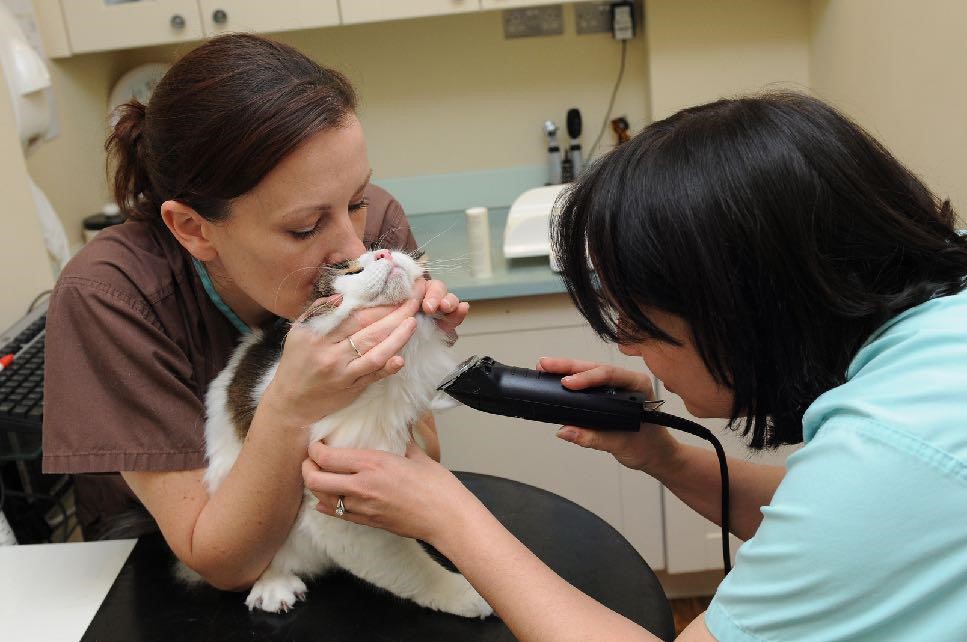
- Quiet clippers
- Thermometer – soft, flexible tip, rapid thermometers are ideal in cats, and should be adequately cleaned, disinfected and lubricated between use on different patients
- An indirect blood pressure monitor (preferably Doppler or HDO, which are more reliable in conscious cats)
- A means of showing radiographs (a viewer, or a screen for digital radiographs)
- Accurate and properly calibrated electronic scales that are appropriate for weighing cats. The weight of all cats should be monitored at each consultation, and it is essential to weigh cats accurately before any sedative or anaesthetic drugs are administered
Clinical records
Good effective clinical record keeping is essential for all patients. Permanent records detailing all relevant clinical information should be kept in either written or electronic format, and these need to be readily accessible by clinical staff.
The consultation process
The aim of the consultation process should be to obtain a full history, undertake a full physical examination, and consider what further actions or investigations may be required in conjunction with the owner, while ensuring the cat remains as stress-free as possible.
The principles of ‘cat friendly’ handling should be adhered to at all times and the cat should be given time to acclimatise to this unfamiliar environment. We suggest that to allow ‘cat friendly’ principles to be used, a minimum of 10 minutes should be allowed for routine consultations, but allowing more time than this is highly valuable.
History taking
The clinical history should be collected, as far as possible, in a standardised format. Using a clinical history form is an extremely valuable way of obtaining standardised data for all patients.
- Clinical history and/or health questionnaires (for example, including behaviour, mobility, routine prophylactic therapy and general health) can be given to owners to fill out as, far as possible, before bringing their cat in to the clinic or while in the waiting room before the The Cat Care for Life programme provides many useful resources, such as health, environment or mobility questionnaires
- A full history should also include a nutritional assessment – evaluating the cat’s diet, life-style, feeding habits, to see if any changes should be recommended
- To get a full picture of the cat’s state of health, it is vital not to overlook its behaviour, the environment within which the cat is kept, and any changes to that environment, so that potential problems can be picked up at an early It is also important to remember that many medical and behavioural issues are interrelated (eg, obesity, arthritis, idiopathic cystitis, and inappropriate location for elimination)
- Once cats reach the mature life stage (7+), the risk of osteoarthritis increases Many signs of osteoarthritis are subtle in cats and usually better appreciated by clients at home than during a clinic visit. Using a mobility checklist or questionnaire is therefore important for these cats
- Specific questions relating to the presenting clinical problem will need to be asked, but these should not be at the expense of an overall history, except in emergency situations
Physical examination
Patience, gentleness, and empathy are vital characteristics in the consultation room. Even with the best environment and approach, some cats will remain very anxious and a full physical examination may not always be possible at the first attempt. Be prepared to take additional time, schedule another appointment, or hospitalise the cat if necessary. Again, remember that the attitude and approach taken by staff in the consult room may determine whether the client will ever bring the cat back to the clinic. As with the history taking, using a standardised form for physical examination (and additional forms for special investigations such as dental and neurological examinations) will be highly valuable. Useful tips for the physical examination include:
- Don’t ever rush when examining a A little extra time taken will reap huge rewards and this is a classic example of ‘more haste, less speed’
- Always try to let the cat come out of its carrier by itself. Open the carrier and gently put it on the table or the floor (once the exits from the room are secure), and allow the cat to come out (if possible) while you are gathering details of the history with the owner

- Be flexible and let the cat choose – the key is to find out what makes the cat more relaxed and adapt the place/position/way that you do the physical examination to suit the individual Some will be happier on their owner’s lap, others on the floor. Some may enjoy looking out of a window, while others prefer to stay sitting in their carriers or even hiding under a blanket. Try to adapt to whatever the individual cat prefers, be gentle and take your time. Talk gently and aim to complete the majority of the physical examination without the cat realising you are doing anything more than just stroking it
- Sitting with the cat on the floor can help, and can make handling much This is also true for things like neurological examinations
- Some cats prefer to lie down, while others prefer to stand – try to do as much as possible with the cat in its preferred position
- Apply ‘cat friendly’ principles, and always adopt the minimal restraint Any form of overt restraint will signal danger to the cat
- If helpful, split the examination into short sections, and in between allow the cat to change position, have a look around, etc. As soon as the cat gets restless, give it a break – even for a short period, for a stroke or a walk around the room or table
- Avoid direct eye contact where To help, perform as much of the examination as possible with the cat facing away from you. Where direct eye contact is needed, a relaxed gaze with slow blinking will help
- Avoid loud or sudden noises (including ringing sounds and sharp shoe heel noises) and bright lights, unless required for the examination. Also, be aware of the sounds you use – for example a ‘Shhh’ sounds like a hiss to a cat and should be Talk to the cat calmly, slowly and with a quiet reassuring tone. Avoid sudden movements
- Be aware that older cats often suffer from osteoarthritis, which may make handling uncomfortable or painful
- The hypertensive or hyperthyroid cat may feel anxious and require a more cautious approach
- Perform more invasive examinations last. Leave taking the cat’s temperature (where needed) and opening its mouth to the end of the examination if these things are likely to stress it
- Pay attention to owners if they warn that a cat is likely to bite or Don’t expect owners to hold cats safely, and remember the safety of the owner is your responsibility while they are in the clinic
- In exceptional cases, some cats are so fearful that a full examination is not achievable even with the most patient of handling. This is rare, but rough handling with heavy restraint is likely to only make things much worse, cause huge stress to the cat and potentially make future examinations more In these cases, consider if chemical restraint is appropriate, and if so, ensure you get as much information as possible (and collect samples if appropriate) while it is sedated
- Always make sure that owners know and understand what you are doing when you are examining the cat, and what you have found – normal or otherwise – so that they can understand and work with you to determine the right treatment/management plan for their cat
w
Weighing the cat
Paediatric or feline-specific accurate electronic scales should be readily available and, ideally, placed in all consultation rooms. Having scales that will allow the cat to be weighed in its basket may be advantageous in many situations (the basket can subsequently be weighed on its own at a later time when the cat is safely placed elsewhere). Don’t assume all cats weigh the same – the average weight of an adult cat has a wide range (typically between 3 kg and 6 kg), but there are exceptions to this too, and young and old cats especially may weigh considerably less.
Cats with any illness that may be associated with weight loss or a poor appetite, or those that are overweight and are on a weight restriction diet need regular monitoring, depending on the condition.
Hospitalised cats should be weighed daily, and again, weighing cats before administration of certain medications (to ensure accurate dosing, especially with drugs such as sedatives and anaesthetics) is vital. Healthy young to middle- aged cats should be weighed at every clinic visit, and at least once or twice yearly. The percentage weight change should be calculated at each visit and trends noted (eg, a 0·3 kg loss in a 3·3 kg cat doesn’t sound much, but clients might understand this better as 10 per cent bodyweight loss, perhaps working out the human equivalent for themselves). Older cats (12+) should be weighed at least every six months.
Hospitalisation of the feline patient
The overall aim of hospitalisation is to keep the cat in a safe, clean, quiet environment conducive to recovery and where it can be handled with minimum stress to cat or staff.
Hospitalised cats frequently feel vulnerable and stressed, often showing this by hiding in their litter trays or under bedding.
Admitting cats to the hospital
It is helpful to have as much information as possible written down before the cat is admitted to the clinic. Invaluable information includes:
- What the cat is normally fed, including amount and frequency
- The usual type of cat litter and litter tray used
- Whether the cat likes being groomed (what with and frequency), stroked or played with
- Other relevant behavioural information When admitting the cat, also consider:
- Having a predictable environment with ‘normal odours’ is important to feline Encourage owners to leave something that smells of home (eg, clothing, a blanket, or bedding that the cat often uses). Where necessary, explain if this may not be able to be returned, but make owners aware of the benefit this can bring
- Don’t leave newly admitted cats waiting around at floor level in exposed or busy locations, near dogs or facing other cats
- If the cat cannot immediately be transferred to a kennel, cover the basket and ensure it is in a quiet, safe, raised position

Design of the cat ward
Having a dedicated feline-only hospitalisation ward really is an absolute essential for a fully cat friendly clinic. The difference this makes to stress levels and comfort for hospitalised cats is enormous. However, location, size and layout are also vital to the success of having a cat-only ward, along with consideration of the cage size.
If possible, the ward should be large enough to contain a set of electronic scales suitable for weighing cats to enable daily monitoring of in-patients without having to remove them from the ward. Hospitalised cats should be checked frequently and owners must be informed (preferably in writing) of the level of overnight (and out of hours) care provided for hospitalised cats.
Cat-only ward
Being above, or next to barking dogs is not conducive to relaxation for a feline patient! A completely separate location for canine and feline patients is far preferable. The cat ward should therefore be physically separated from the dog ward with solid walls, and should allow for complete closure for safety and security.
The ward should be calm and quiet and positioned away from noise (eg, washing machines, etc). It should have appropriate lighting, ventilation and temperature control for feline patients.
Shared ward
In a small clinic, if dogs and cats absolutely have to be housed together, using the synthetic dog appeasing pheromone may help comfort hospitalised dogs, which can have a secondary beneficial effect on cats. If feasible, organise a timetable that allows for different species to be admitted for routine operations and investigations at different times/days. The noise of dogs, other cats, banging equipment or metal implements should be excluded from the ward as far as possible. If there is a noisy cat in the clinic, it should ideally be kept separate so that the other cats can’t hear it. Similarly, when performing procedures or examinations other cats should not be allowed to see or hear this.
Location of the ward and visibility of cats
The ward should be in a location that is easily accessible and does not require the cat to be taken through busy noisy areas to get there. However, it needs to be near enough to other areas to ensure that the cats are frequently observed, and not forgotten about. Place cats as far away as possible from entrance doors, stainless steel sinks, telephones and other noisy, busy areas. Timid, frightened or very ill cats generally need more quiet, but observation must still be straightforward. The careful use of glass panels in doors and partitions, or even having a glass wall, may greatly enhance the ability to observe cats easily without being intrusive.
Size of the ward, temperature and ventilation
The size of the ward is important, regardless of the number of cages within it. The room needs to be wide enough to get cats in and out of the cages without them having to be held directly in front of another patient. If the ward isn’t next to a procedures room, there may need to be space for a table where cats can be examined, again without having to be directly in front of the other hospitalised patients.
There needs to be space for personnel to work and observe the cats without having to be right close up to the cage. The ward should be temperature- controlled (heated or cooled) to provide an ambient temperature of around 18 to 23°C. Adequate ventilation is also important and relative humidity should be kept around 35 per cent.
Cages, cage design and size
There should be a sufficient number of cages in the ward (and of sufficient size) for the normal workload of the clinic. They should be constructed of solid, impermeable material to facilitate cleaning and disinfection and should be escape-proof. The floor the cat rests on must be solid.
- Stainless steel is commonly used, but may conduct heat away from the cat, can be quite noisy, and reflections may stress some White glass fibre cages give better comfort for cats, are quieter and warmer and, if finished well, are just as easy to clean.
- The front of the cage must be easy to clean, allow good observation and prevent escape or A toughened glass door allows very good visibility, reduces the risk of airborne infection spreading, and reduces the chances of the patient putting paws through the bars and opening the door or causing self-injury.
- If a mesh front is used, consider the size of the mesh – if too small it may reduce visibility but if too large small kittens may get their heads stuck. Cages with different size mesh may be
- Rubber or plastic stoppers on metal cage doors are very valuable to reduce noise when the doors are
The position and layout of the cages is important:
- The position of the cages should avoid direct visual contact between patients and the risk of aerosol spread of infectious Ideally cages should not abut each other (eg, at a 90° angle) and should not face each other
- If cages do face each other (directly or at an angle) there should be a minimum distance of 2 m between the closest parts of the cages, or an opaque barrier (e.g. a curtain) between the cages
- If space allows, having a mobile cage may allow flexibility in hospitalising some patients that may get too stressed in a general ward
- Ideally, the lowest cages should be at a safe height for personnel (about 90 to 100 cm above floor level) so the cat is fully visible and can be retrieved easily
- If there are two rows of cages, the lower level should be raised off the ground by at least 20 Cats prefer not to be at floor level
- Cages that are too high or too deep can also prevent good observation, and pose a safety risk to personnel as it is more difficult (and more stressful) to retrieve the cat from the back of the cage, and are also difficult to clean properly

Furnishing the cage
Hospitalised cats frequently feel vulnerable and stressed. Often, small changes can make the hospitalisation cage much more acceptable.
- Cats enjoy being in a high position and often prefer to lie on a shelf or ledge within their cage. A shelf can be very useful for cats hospitalised for more than 24 hours. Some cages have inbuilt shelves, which are excellent for long-stay patients, but even an upturned disposable cardboard box that the cat can sit inside or on top of will help. If the cage is of sufficient size, the cat’s carrier (open or with the door off) in the cage is another
- The ward may contain a mix of cage sizes for long and short stay A smaller cage may be acceptable for day-patients, but at the very least there should be adequate space for a litter tray, bedding and separate food and water bowls. Many day patients are admitted for minor procedures such as neutering or dental work and, although they may not be in the cage for long, there needs to be adequate space for them to be fully stretched out with their neck extended to allow a safe recovery from anaesthesia. Cats that are hospitalised for more than 24 hours should have a larger space allowing some degree of free movement.
- ISFM suggests minimum internal sizes for cat cages are (width x depth x height in cm):
- Day patient and patients staying up to 24 hours: 3600 cm2 floor area (e.g. 60×60) x 55cm
- For longer than 24 hours: 6300 cm2 floor area (e.g. 90×70) x 55cm (minimum)
- Comfortable warm hygienic soft bedding should be used for all feline patients to provide a soft surface for the Towels and blankets may be used, but absorb moisture and so must be changed quickly if they become soiled. Old newspapers are not enough! There should be enough bedding to cover the base of the cage especially if the cages are made of stainless steel.
- Many cats like to hide when hospitalised – providing materials to enable them to feel secure and partially hidden without the need to hide under bedding is helpful. There are many ways to provide hiding such as a disposable cardboard box, commercial ‘igloo-type’ beds, or sack-type
- If a towel is used for restraining the patient, it is useful for this to be kept within the cage so that it picks up the cat’s own Some bedding or clothing from the owner may help to reassure the cat with a familiar smell.
- The cage should be large enough to accommodate a reasonable sized litter tray, and the clinic should have a range of cat litters available to accommodate individual cat preferences. Some cats prefer privacy and may prefer a covered tray or a tray inside a cardboard box turned on its
- Non-absorbent cat litter (eg, commercial non-absorbent granules or clean aquarium gravel) should be available and used to facilitate ‘free catch’ urine sample collection when
- Maintaining body temperature may be crucial for some patients, and facilities should be available to do Under-floor heating in cages may be ideal, but heat pads with bedding on top (taking care not to burn cats which are unable to move) also work. Microwaveable snuggle beds and wheat bags are useful, but care should be taken that they are not too hot (causing burns). Hot water bottles are an alternative – remember that if left to cool they will take heat away from the cat.
- Food, water bowls and litter trays should be placed as far apart as possible in the Placing the litter tray in one corner, and the food/ water bowls in diagonally opposite corners will help. If food and water can also be separated this is ideal.

- Food and water bowls should be shallow (to avoid the cat’s whiskers brushing against the sides when eating/drinking), and should not be made of plastic (as this may become tainted with odours). Shallow ceramic dishes are
- Disposable or readily cleaned/ disinfected toys should be made available in the cage for cats that are hospitalised for more than 24 hours and which enjoy playing (especially young cats and kittens).
- In some situations, where a cat is becoming stressed in the clinic and other measures are already available in the cage, covering the front of the cage (or partially covering the front of the cage) with a towel or blanket may help reduce stress. If this is done, it is important that additional measures are taken to ensure the cat is checked appropriately, and this is rarely (if ever) suitable for patients that require intensive Hiding opportunities should still be provided in the cage.
Hospitalised cats should be checked frequently and owners must be informed (preferably in writing) of the level of overnight (and out of hours) care provided for hospitalised cats.
Additional considerations for the cat ward
- Facilities for hand washing and disinfection should be available in the cat
- Washing and disinfection facilities for bowls and trays must be available in the in-patient area of the clinic. There should be separate washing/ disinfection facilities for litter
- The food storage and preparation area must be separate from the washing and disinfection facilities used for food bowls, water bowls, litter trays, This is important to prevent cross-contamination with infectious agents.
- A variety of foods appropriate for cats should be available, with the ability to cook or prepare fresh foods, and suitable refrigerated
- For transport within the clinic, cats should have an individually assigned This may be the cat’s own carrier, or a clinic carrier, but it should never be used for another cat without being thoroughly cleaned and disinfected.
Identification and monitoring of in-patient cats
- All cats should be positively identified while hospitalised in the clinic – eg, using disposable collars and clearly identified cages and
- All hospitalised cats should have detailed hospital day sheets (charts) filled in with timed initialled recorded These should include recording of pain, behaviour and stress assessments. Records should include but are not limited to:
- Vital signs (including weight)
- Treatments
- Food and water (when offered, how much consumed)
- Defecation (time, amount, quality character)
- Urination
- Clinical signs
- Behaviour and demeanour
- Pain assessment
- Stress assessment
- IV fluid therapy
- There should be clear instructions from the veterinarian on how often various parameters need to be monitored and when treatments should be given (along with dose and route).
- A separate treatment chart may be needed, especially for cat requiring multiple
- Hospitalised cats should be checked frequently and owners must be informed (preferably in writing) of the level of overnight (and out of hours) care provided for hospitalised
- There should ideally be a minimum of daily examinations recorded for every in-patient by a qualified veterinarian throughout their hospitalisation
Additional equipment for hospitalised cats
- Facilities should be available for provision of supplemental oxygen for hospitalised
- Facilities should be available for bathing, drying and grooming hospitalised
- A range of intravenous fluids (including colloids and crystalloids) should be available together with suitable cat-sized catheters and administration Cats become dehydrated easily, and intravenous fluids should never be withheld if needed. However, care is needed to avoid fluid overload, especially in cats with compromised cardiac function or acute renal disease. There should be the ability to control the volume of fluid administered, ideally through the use of infusion pumps or syringe drivers, or potentially through volume-limiters such as burettes. Syringe drivers and fluid pumps can also be used for constant rate infusion of medications.
- Long-stay, long intravenous catheters placed in the saphenous or jugular veins can be useful for maintaining an intravenous line when required for more than a few
Control of infectious disease and isolation facilities
Infectious and contagious diseases are common among cats, and when stressed they may be more likely to shed infectious agents.
- There should be adequate cleaning and disinfection protocols for rooms, cages, bedding and equipment that ensures the risk of cross- contamination is
- The cat ward should be cleaned and disinfected daily – for cats staying in for a longer period it is useful for them to have familiar scents around them– ie, if bedding is not soiled leave it in the cage with the cat.
- Cat cages should be thoroughly cleaned and disinfected between patients, not forgetting the bars on stainless steel
- Food and water bowls should be cleaned and disinfected between
- Equipment (scales, thermometers, auriscopes, table tops, ) should be thoroughly cleaned and disinfected between patients.
- Carriers and bedding should be thoroughly cleaned and disinfected between
- Disinfectants should be chosen that are appropriate for use around cats (eg, not phenolics).
- There should be a separate isolation ward for isolation of infectious cats or care of cats with zoonotic This should be self-contained to avoid cross-contamination to the rest of the clinic, preferably with a separate entrance. The facility will require intensive nursing, and be near enough to other facilities to be able to monitor cats closely. Even one or two cages in a small room with a glass door to allow good visibility may suffice.
- The isolation room should ideally have facilities for washing and disinfection within the room, and equipment and cleaning utensils should remain in the isolation
- A footbath containing suitable disinfectant should be placed outside the isolation room and appropriate protective clothing should be used, such as disposable aprons or suits, gloves, face-masks and shoe
- Ideally an active (negative pressure) ventilation system should be used for the isolation
- Strict hygiene protocols should be put in place and adhered to by The number of staff entering the isolation area should be strictly limited and, ideally, one person should be designated to nursing isolation patients to ensure that they receive enough care.
- If a dedicated isolation facility is not available, a portable cage can be set up in a separate area (with the appropriate disinfection measures) when
Feeding the hospitalised patient
Hospitalised and sick cats are likely to be anorexic because of pain, stress, nausea or dehydration and malnutrition can be a significant contributor to morbidity and mortality.
- Cats should be weighed daily and have their body and muscle condition scores evaluated at least two to three times
- Calculate the caloric requirement for each cat and monitor their food
- Where possible feed what the cat normally eats at home as the first choice(s).
- For hospitalised cats, food needs to be nutritious and palatable – high protein and high fat diets (see the Royal Canin range of diets) tend to be

- more palatable, as do wet (canned or sachet) foods warmed to body temperature.
- Evaluate all inappetent cats for systemic disease, for pain, dehydration and nausea, and treat these adequately before introducing food to avoid development of food
- Reduce environmental stressors (eg, dogs, noise, odours).
- Ensure food is placed away from the litter tray and if possible away from water
- Tempt cats to start eating by hand feeding small amounts of highly palatable Spend time with the cat encouraging it to eat.
- Offer small frequent meals, removing the food bowl in-between (eg, after an hour).
- Give a choice of two foods – more is overwhelming – or try with a different food
- Offer some dry food too as some cats have a preference for
- If dietary manipulation fails, appetite stimulants may be attempted (eg, cyproheptadine, mirtazapine) where
- Avoid syringe feeding as this is likely to induce or exacerbate food aversion and may cause inhalation
- Enteral assisted feeding (tube feeding) should be strongly considered in any patient that remains inappetent or has persistent low calorie intake for more than 3 to 5 days, and for cats that have been anorexic for 3 days or
- Naso-oesophageal tube feeding is very useful for short- term nutritional support, using specially formulated liquid However, oesophagostomy or gastrostomy tubes are valuable for longer-term support and allow a wider choice of diets to be used including blenderised diets).
Operating theatre and anaesthesia
There should be a dedicated operating theatre set aside for sterile surgical procedures. Cats should ideally be anaesthetised and clipped for surgery in a separate room.
The operating room should:
- Have easily cleaned and disinfected surfaces and operating table
- Only have equipment in it for surgical procedures (± radiography) – ie, it should not be used to store other equipment/materials
- Be well lit with light(s) to illuminate the surgical site
- Have ‘scrub’ facilities that are separate from any ward hand washing facilities, and ideally outside the operating theatre
- Have a means of displaying radiographs
- Not be used for purposes other than sterile surgical procedures There should be appropriate equipment available to induce and maintain anaesthesia safely in a range of feline patients (including kittens and cats with various diseases), and it is the veterinarian’s responsibility to ensure that the risks of anaesthesia are kept to a minimum by using appropriate anaesthetic and analgesic agents. Suitable equipment should include:
- Equipment to administer oxygen
- Equipment to provide resuscitation
- A range of appropriately sized cuffed and uncuffed endotracheal Uncuffed tubes are preferable to avoid tracheal damage, unless the procedure carries a high risk of aspiration (such as dentistry)
- Silicone endotracheal tubes are preferred to ‘red rubber’ tubes as they are less irritant to the larynx
- Cat-sized laryngoscope and local anaesthetic suitable to anaesthetise the larynx prior to intubation
- A temperature-compensated vaporiser if volatile anaesthetics are used

- Anaesthesia circuits appropriate for cats are required if inhaled anaesthetics are used – for example, a T-piece circuit and a range of cat-sized face masks
- The ability to warm patients to maintain body temperature – warm air blankets (eg, Bair HuggersTM, arizant.com) are excellent for this. Microwaveable heatpads (eg, SnugglesafeTM Microwaveable Heat Pads) are a less expensive alternative
- Ensure IV fluids are being appropriately warmed where needed
- Close monitoring of vital parameters by a trained member of staff is essential when cats are anaesthetised, and anaesthetic charts should be routinely used and filled Details should include:
- Date, personnel involved, procedure, duration
- Patient details (ID, weight)
- Induction and maintenance drugs and doses
- Regular recording of vital signs, on anaesthetic charts should include
- Temperature
- Respiratory rate
- Heart rate – measured with stethoscope, oesophageal stethoscope or ECG
- Peripheral pulse quality and rate
- Pulse oximetry (with a suitably sized probe for cats)
- Blood pressure – while oscillometric machines are suitable for anaesthetised cats, they are inaccurate for conscious Doppler or HDO machines are accurate and suitable for either conscious or anaesthetised cats. The cuff width should be approximately 30 per cent of the limb circumference – typically about 2·5 cm for most adult cats
- Ideally capnography
- Any complications
There should be adequate monitoring of the cat in the post-anaesthetic recovery phase by a suitably trained member of staff.
Surgical equipment
Adequate surgical equipment should be available for the range of procedures undertaken at the clinic, and should include equipment needed for emergency procedures.
Adequate sterilisation facilities should be available to ensure surgical equipment is properly sterilised prior to each use. In addition, sterile gloves and gowns should be available and used appropriately.
Equipment should be well maintained, and quality controls should be run from time-to-time to check accuracy.
Many cats suffer with dental disease and it is essential that suitable dental equipment is available and maintained so that these procedures can be carried out to a high standard. Good dental care should involve:
- Good client education so that the importance of dental and oral care is recognised
- A thorough oral examination as a part of every physical examination
- Full dental examination under anaesthesia when indicated (eg, when abnormalities are identified on routine conscious evaluation)
- Facilities for dental radiographs to be taken (ideally this should include intra- oral non-screen radiographs)
- Proper dental records and charts should be maintained for cats
Dental tools available should include:
- A selection of scalers, curettes, periodontal probes, elevators and/or luxators, for example:
- Couplands#1elevator
- Extraction forceps pattern 76N
- Instruments should be sharp and properly
- Protective equipment for dentals should include aprons, masks, goggles and disposable
- Facilities should be available to mechanically scale a
 nd polish teeth, to section teeth and to perform extractions, and cooling water must be available at the operative High-
- speed air-driven dental units are recommended.
- Small, round friction grip burs, #1 or 2 are
- All dental equipment should be properly cleaned and disinfected/Superslim elevator sterilised between use on different patients to avoid transmission of infectious diseases.
Diagnostic imaging
An adequately equipped cat clinic should include the ability to undertake diagnostic quality radiography, as this is essential for a number of feline emergencies. To avoid unnecessary exposure of humans to ionising radiation, a range of supports and restraints to facilitate positioning of sedated or anaesthetised cats should be available.
Careful records of all radiographs should be kept, and the radiographs themselves should be labelled in a tamper-proof way. Ideally, ultrasound equipment will either be available at the clinic, or arrangements will be made to enable ultrasound to be performed readily in those cases that need it.
Laboratory facilities
For adequate monitoring of cats, certain basic laboratory equipment should always be available in the clinic (see Idexx range), this includes:
- A clinical microscope
- The ability to prepare blood smears and smears of fluids/ tissue impressions
- A centrifuge to assess PCV, to collect serum/ plasma, and to perform urine sediment analysis
- Equipment to measure blood glucose concentration
- Equipment to measure blood urea concentration
- Equipment to measure urine and serum/plasma specific gravity (ie, suitable refractometer)
- Equipment to perform basic urine chemistry analysis (eg, urine strips)
Equipment should be well maintained, and quality controls should be run from time-to-time to check accuracy.
Ideally, a broader range of in-house tests may be available, but arrangements will need to be made with external laboratories for at least some tests to be conducted. Where ‘in house’ laboratory testing is done, it is important to:
- Understand the limitations of any equipment used
- Ensure the equipment is properly maintained and calibrated
- Undertake quality control checks
- Have staff that are adequately trained to ensure accuracy of results
Medicinal products
Availability of licensed feline products varies greatly between different countries. It is important that each clinic stores a range of suitable products according to the manufacturers’ instructions and that medicines are adequately labelled.
Relevant statutory regulations need to be adhered to, but some drugs may need to be used that are not specifically licensed for use in cats. Where such drugs are used, it is prudent to always first obtain informed consent from clients.

It is recommended that clinics have access to a good quality veterinary- nformation service on the management of poisoning in cats. A good example is the Veterinary Poisons Information Service (www.vpisuk.co.uk), which offers its service internationally.
Creating a cat friendly clinic
Very few of the ideas outlined in this manual are expensive; many are as much to do with approach, organisation and attitude as with materials or buildings. Lots of these small things can make big differences. Here are some comments from Cat Friendly Clinics on how it has made a difference:
“Being cat friendly has encouraged new clients to join our clinic solely on the basis that we go that extra mile for our feline patients.”
‘We are a large referral centre and staff in all areas of the clinic became involved in making the clinic cat friendly. The effects have been long-lasting, with all our staff well aware of the impact of anxiety when managing our feline patients and everyone constantly looking for new ways to help reduce the stresses on them.”
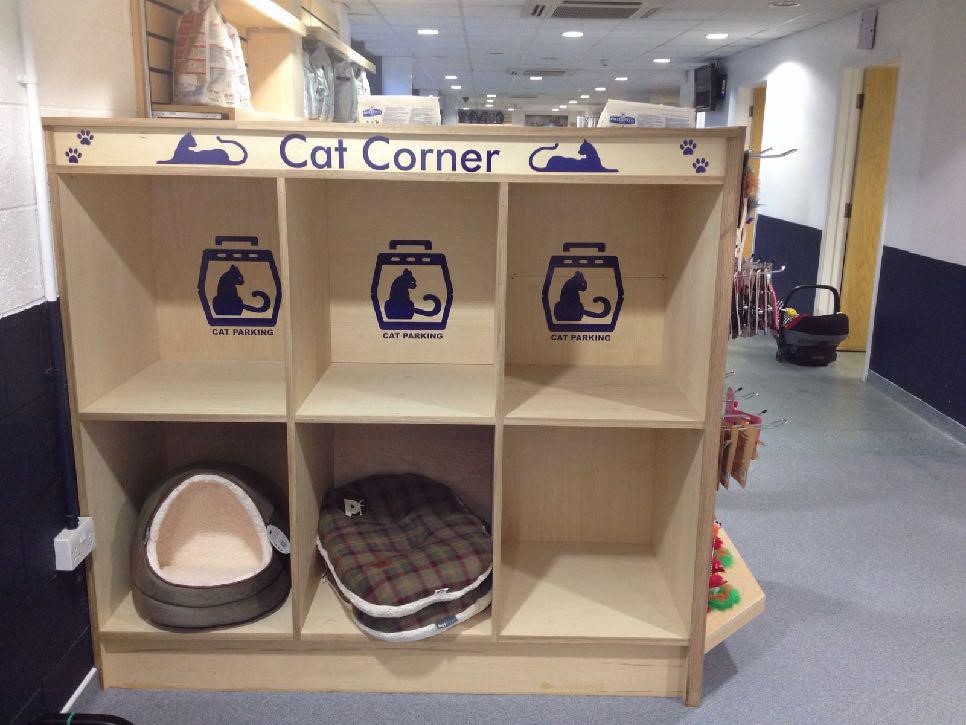
“We have introduced cat parking, separate cat and dog waiting areas, and a separate cat kennel ward. We are all very proud of being a cat friendly practice and this has helped us to use the philosophy in all aspects of our clinic, such as the way we deal with cats in the consulting rooms and restraining for procedures. The cats at our clinic are definitely more relaxed and happy to be at the clinic since we made the changes.”
“As a committed Cat Friendly Clinic we are continually receiving feedback from owners who are impressed with our knowledge and understanding of cat’s special needs. We are finding our hospitalised patients are calmer, easier to treat and more settled after recovery. It has also been possible to perform more blood pressure tests for our older patients, with far more accurate results.”
“Being cat friendly had a very positive impact on our clinic from both a client point of view and a staff perspective, in terms of the appreciation of the different care and nursing requirements for the feline species. Our standards of care are now consistently higher, as we all ‘think cat’. We also used a number of the ideas when we designed and built our new practice.”
“Many of our clients and their cats have benefited from us being a cat friendly clinic. Several of our clients welcome the cat only clinics which are set aside weekly. Their pets are calmer and visit to the clinic is much less stressful for both owner and their cat(s). Our completely separate cat ward with low lighting and Feliway plug-ins creates a calmer environment for our hospitalised patients. We provide hiding places and toys within the kennels.”

This Guide to Creating a Cat Friendly Clinic is brought to you by the International Society of Feline Medicine, and is based on ISFM’s standards of feline wellbeing within a veterinary clinic. ISFM (International Society of Feline Medicine) is the veterinary division of the charity International Cat Care – www.icatcare.org
Share on facebook
Share on twitter
Share on linkedin



 Medicine (ISFM) is the veterinary division of International Cat Care, a not-for-profit international organisation for veterinary professionals with an interest in feline health and welfare. ISFM is for every veterinarian who works with cats and is focused on providing practical information, help and support. Veterinary members of ISFM (see www.icatcare.org/veterinary/isfm/vet-membership/) currently receive: